Strategy · Tactical reads
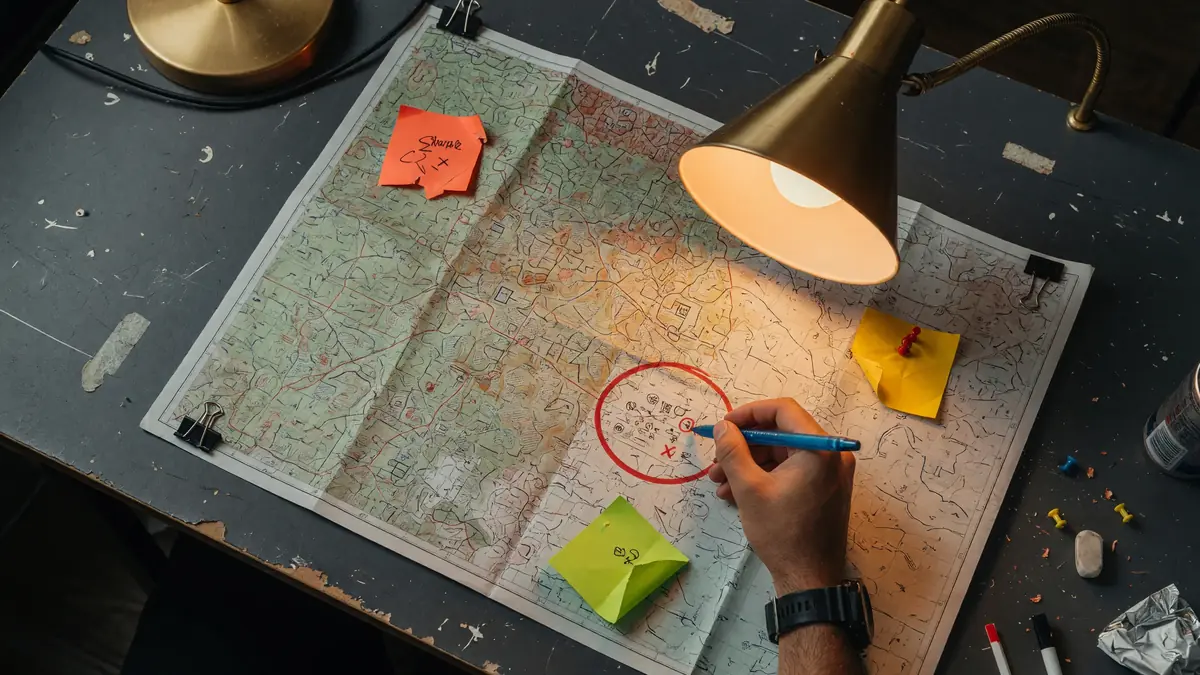
A tactical read is a map with a method. The callouts are verified against the developer's map call sheet. The objectives are scored from broadcast VOD. The rotations are the desk's reading of how a team moves between those callouts under pressure.
This chapter covers Map A under patch 7.4b: five callouts, three objective meters, and the rotation patterns that decided North Light's Map 3 win and Orbital's B retake signature.
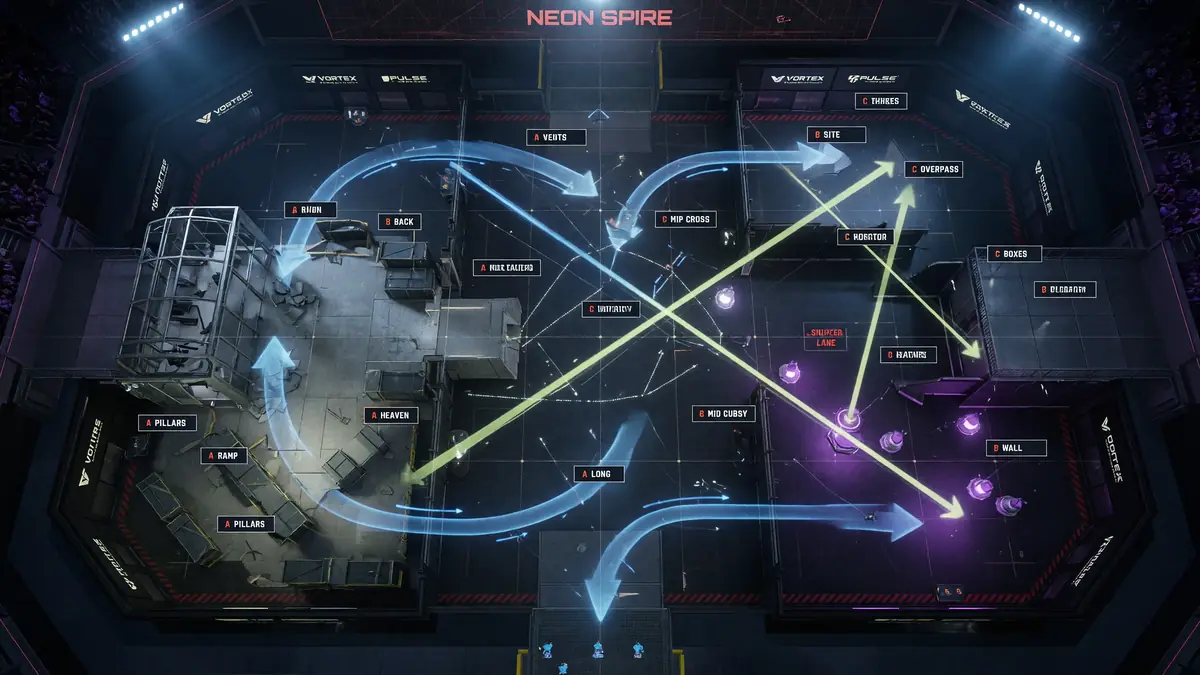
A default is a two-duelist pinch backed by Controller smoke. The opening holds the near rail for the first ten seconds, then pivots to the plant site based on the defender rotation. North Light's A default is the team's most-used opening this stage and has held against three different defensive setups.
Under patch 7.4b the duelist entry cost makes the A default more expensive. Teams that built their default around two utility entries now have to choose between third-round pressure and a slower 4-round cycle. North Light's answer has been to pre-stage the Controller and Initiator line two seconds earlier.
Mid control is the map's tempo round. Whoever holds mid sets the second-half pace. The callout is the intersection of three paths: the near rail from A, the long rotate from B, and the upper utility line from the defender spawn. Holding mid means holding all three.
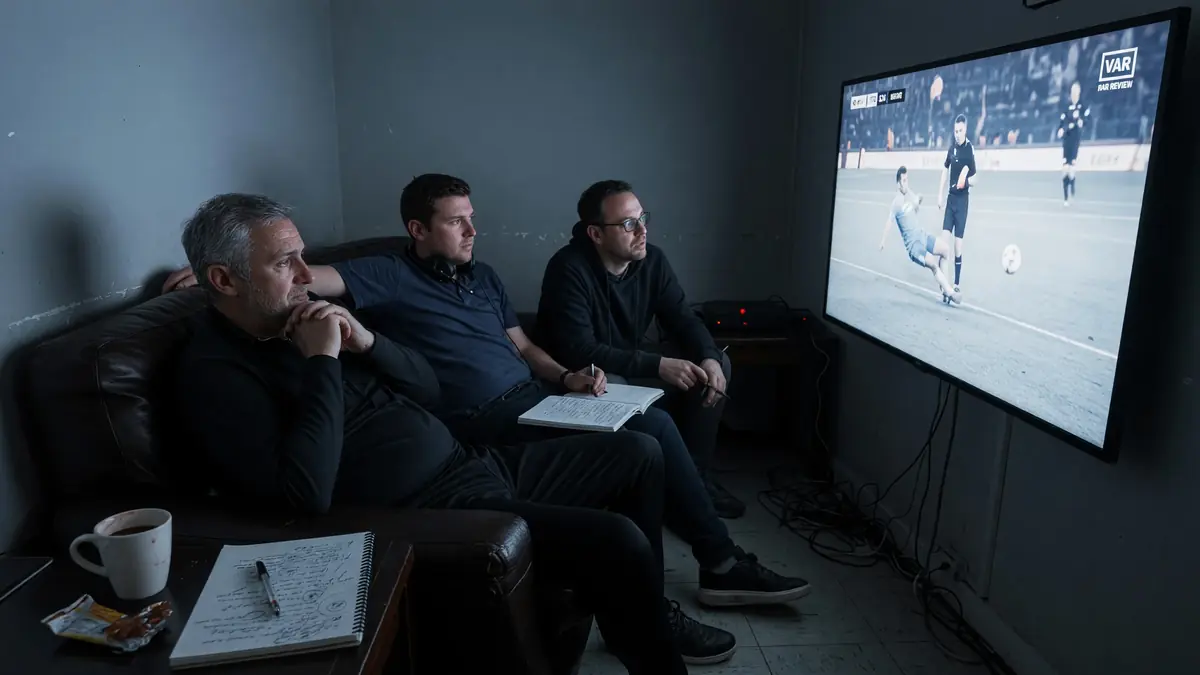
Orbital's mid-control trade in Round 4 of last night's series bought seven seconds of map control. The Sentinel caught the rotate. The objective meter moved from 48/52 to 62/38. The difference is visible in the film room's Round 4 note.
B retake is Orbital's signature. The team trades map control for a clean retake line. The Sentinel holds the flank, the Controller denies the plant site vision, and the Duelist lands the entry on a pre-smoked line. The pattern has not dropped a map since the opening day.
Under patch 7.4b the Controller wall duration is extended on this map. The change favours late-round executes and is confirmatory for Orbital's existing line. Teams that play a passive B hold will find the retake harder. Teams that play a trap-heavy Sentinel line will find the retake more favourable.
The long rotate is the path from A to B under pressure. The callout is the corridor that connects the two sites and is the most contested path on the map. Teams that hold the long rotate control the second-half pace. Teams that lose the long rotate are forced into a default that is more expensive under 7.4b.
Helix's slow-default style tends to concede the long rotate early and recover it late. The pattern extends Bo3s and is visible in the team's three Map 3s this stage. The desk's match ledger flags this pattern as an editorial scenario, not a confirmed fact.
Upper utility is the defender spawn line that feeds both A and B. The callout is the high ground that lets a Controller or Initiator deny vision without committing to a site. Teams that hold upper utility control the information break. Teams that lose upper utility are forced into a guess.
North Light's Static has held upper utility in four of five series this stage. The pattern is visible in the role dossier's Controller note and in the film room's Round 11 post-plant hold.
Objective meters reflect contested-site time scored from broadcast VOD. A meter of 62/38 means the first team held the site for 62 percent of the contested window and the second team held it for 38 percent. The meter is not a prediction of future performance and is not a claim about which team is better.
When a VOD is incomplete or a round is not fully captured, the meter is flagged as partial and the verification timestamp is published. Readers who want the long-form method can open the evidence standards panel on the homepage.
Live tactical coverage is available through the broadcast partner route. Editorial content remains independent of the sponsored path.
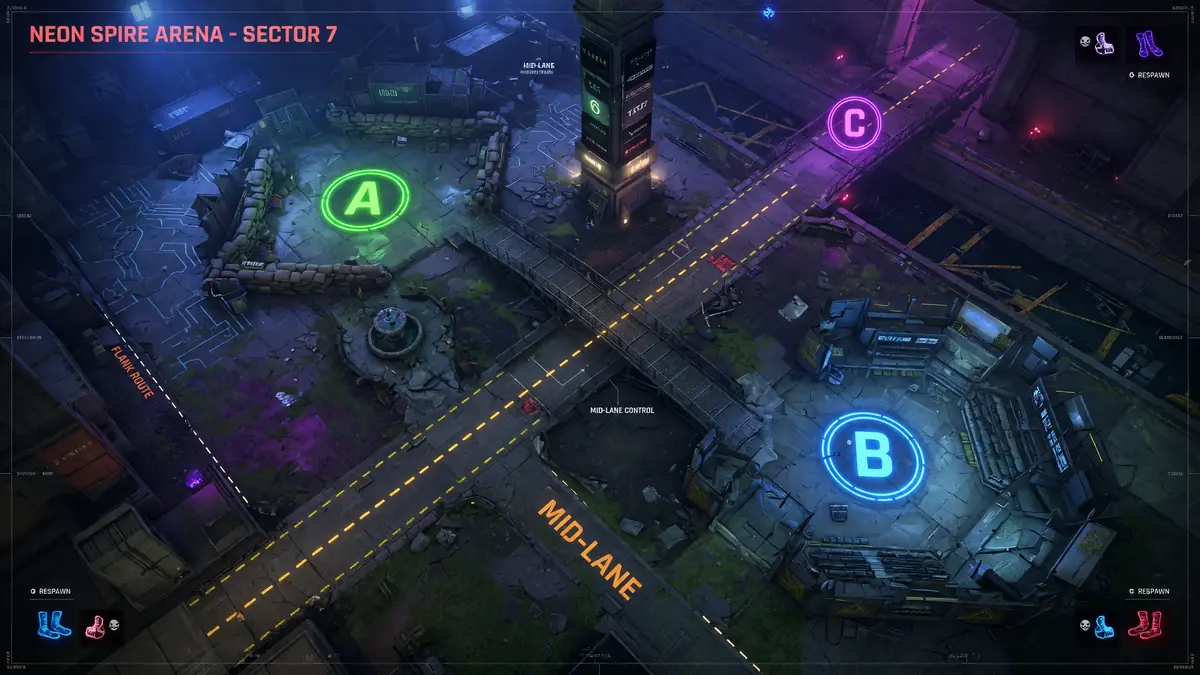
Every callout on a Stream tactical map carries a source tag against the developer map call sheet or a circuit broadcast standard sheet when the developer sheet is silent. Invented callout slang from a single team's private scrims is not published as a universal callout.
Objective A, rotation B and site C style labels are used when teaching. Named callouts are used when the sheet confirms them. Mixing the two without labels is a method failure.
Hover-reveal or focus-reveal evidence on the homepage tactical map shows the verification date. Child pages print the attribution in the caption and in the surrounding prose so keyboard and print readers get the same promise.
When a map is reworked, the call sheet changes and the desk rebuilds the tactical page. Old callouts are archived with the old patch stamp rather than silently renamed.
Long rotate under pressure is the pattern that separates organised teams from default-only teams. Holding upper utility while rotating is the pattern that preserves information. Conceding mid to buy a retake line is Orbital's signature and is worth watching whenever a trap-heavy defence appears.
Helix's pattern of conceding the long rotate early and recovering late extends series. That pattern is an editorial read from repeated VOD, labelled as such in the match ledger.
North Light's pattern of pre-staging controller and initiator two seconds earlier under 7.4b is an adaptation read. If the pre-stage disappears, the dossier and role pages should be updated after confirmation on VOD.
Rotation patterns are not moral qualities. They are habits under a patch. Habits change.
A 62/38 meter means contested-site time, not "better team." A team can win a map with losing meters if the closing rounds fall their way. Meters are a descriptive film-room tool.
Partial meters from incomplete VOD are flagged. The desk would rather publish a partial flag than invent a full meter.
Readers should pair meters with the ledger's confirmed facts. A meter without a confirmed scoreline is incomplete context. A scoreline without a meter is still a valid confirmed result.
The film room on the homepage and the strategy chapter share method but not identical prose. Homepage film room is series-specific. Strategy chapter is map-pattern durable across series.
Tactical maps on Stream combine cinematic plates with overlaid callout pins. Pins that teach structure may use objective A / mid / B style labels when a public call sheet is not being quoted line-for-line. Pins that quote a developer or circuit sheet carry that attribution in the caption.
Do not scrape the pins into a third-party callout pack and present them as an official sheet. They are an editorial teaching layer on top of verified method, not a rights-cleared cartography product.
When a map rework lands, rebuilds happen on the same chapter URL with a new stamp rather than a maze of duplicate URLs. Historical callouts remain readable in older film-room notes that reference them.
Readers learning a new title should pair this chapter with the patch checklist and one full VOD, not with highlight clips alone. Clips hide rotations. Full rounds show them.
Pick one map. Read the five callouts. Watch one full half on VOD without skipping. Pause at each rotate and name the callout out loud. Re-open the objective meter definitions and score two rounds yourself. Compare your score to the film-room method. The loop trains attention more than it trains prediction.
No. Callouts are verified against the developer’s map call sheet. The desk does not invent callout names.
No. Objective meters reflect contested-site time scored from broadcast VOD. They describe past performance.
Active match windows are re-verified every 15 minutes. Map callouts are re-verified when the developer publishes a call-sheet update.
No. The duelist entry cost makes A default more expensive. Controller walls favour late-round B retakes. Initiator recon is narrowed on one map.
Through the corrections contact on the Contact page. Substantive corrections are timestamped and surfaced publicly.
No. The desk has no commercial relationship with any team or player. Sponsored routes are clearly labelled and independent of editorial coverage.